WebP Format: History, Mechanics, and Digital Legacy
The evolution of the internet has always been closely tied to the evolution of image formats. As websites became more visual and users demanded faster experiences, the need for more efficient image compression grew increasingly urgent. While formats such as JPEG, PNG, and GIF dominated the web for decades, their limitations became more apparent as internet traffic expanded and mobile browsing surged.
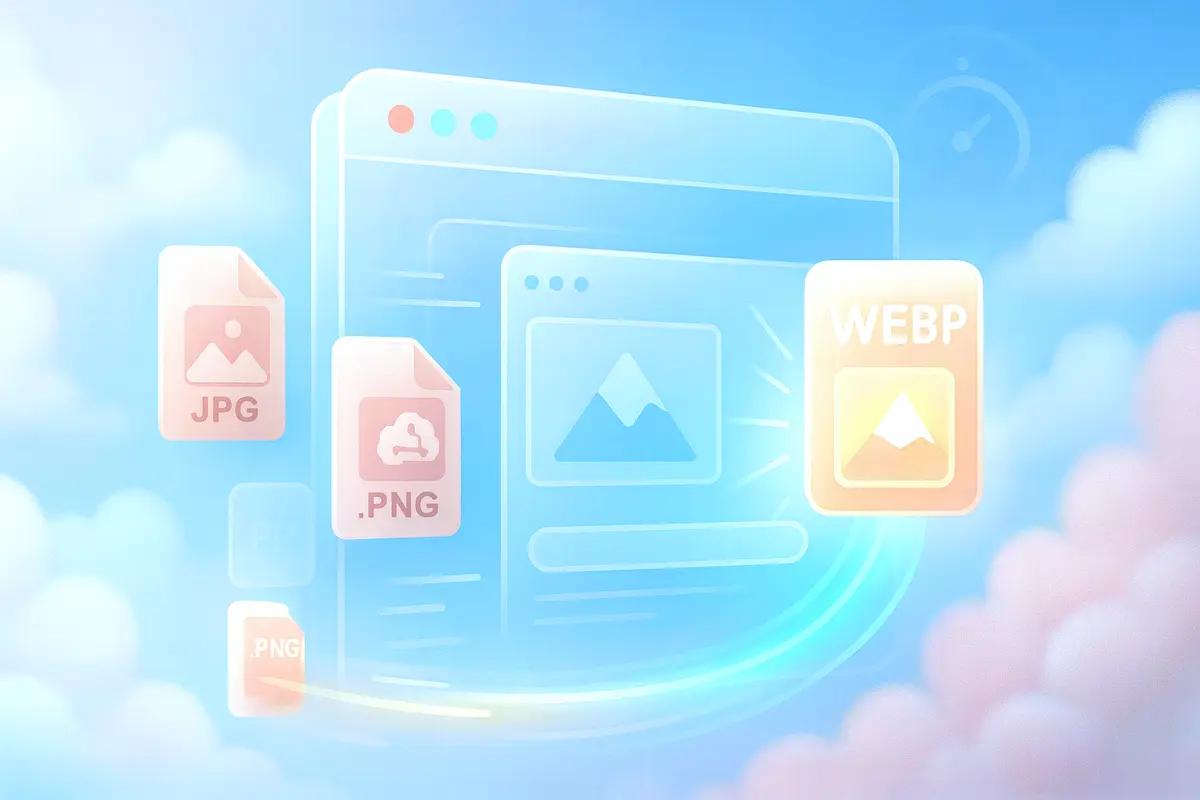
To address these challenges, Google introduced WebP, a modern image format designed specifically for the web. By combining efficient compression with support for transparency and animation, WebP aimed to replace multiple older formats with a single, versatile solution. Today, WebP is widely used across websites, content delivery networks, social media platforms, and mobile applications, helping reduce bandwidth consumption while improving page-loading performance.
Origins of WebP
WebP was announced by Google in September 2010 as part of the company's broader effort to make the web faster and more efficient.
The technology originated from Google's acquisition of On2 Technologies, a company known for its video compression innovations. Engineers adapted techniques from the VP8 video codec to create a new image format capable of delivering significantly smaller file sizes than JPEG and PNG.
Google's objective was straightforward: reduce image sizes without sacrificing visual quality. Since images account for a large percentage of web traffic, even modest reductions in image size could lead to substantial improvements in website performance.
From the beginning, WebP was offered as an open format, encouraging adoption by browsers, developers, and content platforms.
Why WebP Was Created
Traditional image formats each solved different problems:
- JPEG excelled at photographs.
- PNG supported transparency and lossless compression.
- GIF enabled simple animations.
However, developers often had to use multiple formats across a single website, increasing complexity and storage requirements.
WebP sought to unify these capabilities by offering:
- Lossy compression
- Lossless compression
- Transparency support
- Animation support
- Smaller file sizes
This flexibility made WebP attractive for modern web development.
How WebP Compression Works
One of WebP's most significant innovations is its ability to support both lossy and lossless compression within the same format.
Lossy Compression
WebP's lossy compression is derived from techniques used in the VP8 video codec.
The image is divided into blocks, and predictive algorithms analyze neighboring pixels to determine the most efficient way to encode visual information.
Instead of storing every pixel independently, WebP stores predictions and differences, reducing the amount of data required.
This approach often produces files that are 25–35% smaller than equivalent JPEG images while maintaining similar visual quality.
Lossless Compression
Unlike JPEG, WebP also supports true lossless compression.
Lossless WebP uses advanced techniques such as:
- Color indexing
- Dictionary coding
- Entropy encoding
- Pattern recognition
These methods preserve every pixel while still achieving substantial reductions in file size.
In many cases, lossless WebP files are significantly smaller than comparable PNG files.
Transparency Support
WebP includes native alpha channel support.
This means images can have transparent backgrounds, making WebP suitable for:
- Logos
- Icons
- User interface elements
- Graphic overlays
Unlike PNG, WebP can combine transparency with efficient compression.
Animation Support
WebP can also store animated images.
Animated WebP files often provide much better compression than GIF animations while supporting:
- Full-color images
- Transparency
- Higher image quality
- Smaller file sizes
As a result, many websites have begun replacing GIF animations with WebP equivalents.
Advantages of WebP
Smaller File Sizes
WebP's greatest strength is its ability to reduce file sizes while maintaining image quality.
Smaller files provide benefits such as:
- Faster page loading
- Reduced bandwidth usage
- Lower hosting costs
- Improved mobile experiences
Versatility
Unlike older formats that specialize in specific use cases, WebP supports multiple compression methods and image features within a single format.
Transparency
Developers can create transparent images without relying on PNG.
Animation Support
WebP serves as a modern alternative to GIF for animated content.
Improved Website Performance
Search engines increasingly prioritize page speed as a ranking factor.
By reducing image payloads, WebP helps websites improve performance metrics and user experience.
Browser and Platform Support
One of the initial barriers to WebP adoption was limited browser compatibility.
Over time, support expanded significantly.
Today, major browsers support WebP, including:
- Google Chrome
- Mozilla Firefox
- Microsoft Edge
- Safari
- Opera
Support is also widespread across mobile operating systems, content management systems, image editors, and cloud services.
This broad compatibility has accelerated WebP's adoption across the internet.
WebP Versus JPEG
JPEG remains one of the most widely used image formats, particularly for photography.
However, WebP generally provides:
- Smaller file sizes
- Similar visual quality
- Transparency support
- Better compression efficiency
For many web applications, WebP offers a more efficient alternative.
Nevertheless, JPEG retains advantages in legacy compatibility and established workflows.
WebP Versus PNG
PNG remains popular for graphics and transparent images because of its lossless nature.
Compared to PNG, WebP often delivers:
- Smaller files
- Equivalent image quality
- Faster downloads
For many websites, WebP has become the preferred choice for transparent graphics.
WebP Versus GIF
GIF has long been used for animations, but its limitations include:
- Restricted color palette
- Large file sizes
- Inefficient compression
Animated WebP files typically achieve:
- Better quality
- More colors
- Smaller sizes
- Transparency support
These advantages have made WebP a compelling replacement for GIF.
Adoption Across the Web
As website performance became increasingly important, WebP gained rapid adoption.
Major websites, social media platforms, and e-commerce services began serving WebP images automatically when supported by users' browsers.
Content delivery networks (CDNs) frequently convert uploaded images into WebP versions to reduce bandwidth consumption.
Popular web frameworks and content management systems also include built-in WebP optimization tools, making adoption easier for developers and publishers.
Today, billions of WebP images are delivered daily across the internet.
Limitations of WebP
Despite its strengths, WebP is not without drawbacks.
Older Software Compatibility
Some legacy applications and devices may not fully support WebP.
Editing Workflows
Although support has improved considerably, certain professional workflows remain centered on older formats such as JPEG, PNG, and TIFF.
Newer Competitors
Formats such as AVIF and JPEG XL can often achieve even better compression efficiency.
As these formats mature, WebP faces increasing competition.
The Future of WebP
WebP occupies a unique position in the image-format landscape.
It offers a practical balance between compatibility, performance, and feature richness. While newer technologies may eventually surpass it in compression efficiency, WebP remains one of the most broadly supported modern image formats available.
For developers focused on website speed, user experience, and bandwidth optimization, WebP continues to be a highly effective solution.
Conclusion
WebP represents a major milestone in the evolution of web imaging. Created by Google to address the growing demands of a media-rich internet, it successfully combines efficient compression, transparency, animation, and broad compatibility within a single format.
By reducing file sizes without significantly compromising image quality, WebP has helped websites load faster and operate more efficiently across desktops, tablets, and smartphones. Its widespread adoption demonstrates how thoughtful engineering can improve both user experience and internet infrastructure.
As the web continues to evolve, WebP's influence remains significant, cementing its place as one of the defining image formats of the modern internet era.