
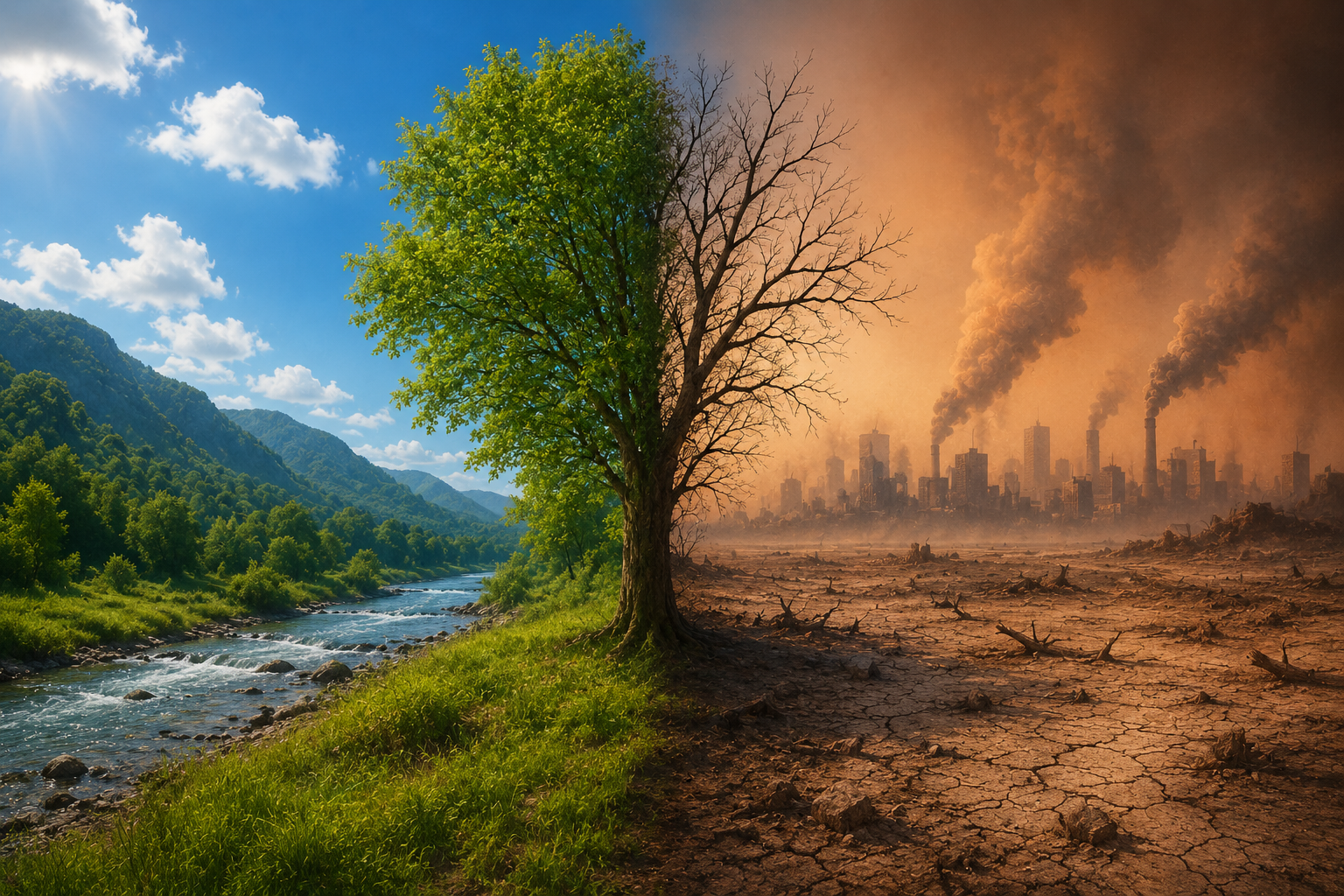
Climate Change: Our Greatest Challenge, Our Greatest Opportunity
Climate Change: Our Greatest Challenge, Our Greatest Opportunity
Introduction: The Planet is Warning Us
The signs of climate change are all around us. From record-breaking summer temperatures and intensifying storms to shrinking glaciers and rising sea levels, the planet is sending a clear message: the climate is changing, and it is happening faster than we anticipated. This is no longer a theoretical problem for the future; it is a defining crisis of the present, requiring immediate and decisive action.
The Science: The Greenhouse Effect
At its core, the driving force behind modern climate change is the greenhouse effect. Earth’s atmosphere naturally contains gases—like carbon dioxide (CO₂), methane (CH₄), and nitrous oxide—that trap heat from the sun, keeping the planet warm enough to support life.
However, since the Industrial Revolution, human activities have dramatically increased the concentration of these gases. The burning of fossil fuels (coal, oil, and gas) for energy, industrial processes, and deforestation have released massive amounts of CO₂ into the atmosphere. This enhanced greenhouse effect is trapping excess heat, causing the global average temperature to rise. The scientific consensus is overwhelming: human activity is the primary driver of this warming trend.
Unprecedented Impacts: A Changing World
The consequences of this warming are already being felt globally and are projected to intensify:
- Rising Temperatures and Heatwaves: Global temperatures have already risen more than 1°C above pre-industrial levels. This is leading to more frequent and severe heatwaves, which pose health risks, strain power grids, and exacerbate droughts.
- Melting Ice and Rising Seas: The polar regions are warming faster than the rest of the planet. Glaciers and ice sheets are melting rapidly, adding volume to the oceans. This, combined with the thermal expansion of seawater as it warms, is causing sea levels to rise, threatening coastal communities and ecosystems.
- Extreme Weather: Climate change is 'supercharging' weather events. We are seeing more intense hurricanes, heavier rainfall events leading to flooding, and more prolonged and severe droughts that trigger devastating wildfires.
- Ocean Acidification: The oceans absorb a significant portion of the CO₂ we release. This causes the water to become more acidic, which dissolves the calcium carbonate shells and skeletons of marine organisms like coral reefs and shellfish, threatening entire marine ecosystems.
- Biodiversity Loss: Climate change is altering habitats faster than many species can adapt, accelerating the rate of species extinction and disrupting delicate ecological balances.
Beyond the Environment: A Human Crisis
Climate change is not just an environmental issue; it is a profound human crisis with far-reaching social and economic implications:
- Food and Water Security: Changing precipitation patterns and extreme weather disrupt agriculture, threatening global food supplies. Water scarcity is also becoming a critical issue in many regions.
- Displacement and Conflict: Rising sea levels and extreme weather can force people to abandon their homes, creating "climate refugees." The competition for dwindling resources can also increase the risk of conflict.
- Public Health: Heatwaves, the spread of vector-borne diseases, and deteriorating air quality all pose significant risks to human health.
The Way Forward: Urgent Action and Global Opportunity Despite the immense challenges, there is still hope. We possess the knowledge and technologies needed to combat climate change. The transition to a sustainable, low-carbon future is not just a necessity; it is an unparalleled opportunity for innovation, economic growth, and improving quality of life for people around the world.
Key areas of action include:
- Transitioning to Renewable Energy: Shifting away from fossil fuels and investing heavily in solar, wind, and geothermal energy sources.
- Improving Energy Efficiency: Using energy more wisely in our homes, businesses, and transportation.
- Protecting Forests and Ecosystems: Deforestation contributes significantly to emissions. Restoring and protecting forests, wetlands, and other ecosystems that naturally absorb CO₂ is crucial.
- Climate Change Adaptation: We must invest in strategies to help communities adapt to the changes that are already locked in, such as building resilient infrastructure and developing drought-resistant crops.
- International Cooperation: Climate change is a global problem that requires unprecedented international collaboration, such as through the Paris Agreement.
Conclusion: Our Shared Future
The choices we make today will define the world of tomorrow. Climate change is a complex challenge, but it is not insurmountable. The defining crisis of our time also presents the defining opportunity of our generation: to innovate, to collaborate, and to build a more resilient, equitable, and sustainable world for ourselves and all the generations that follow.