
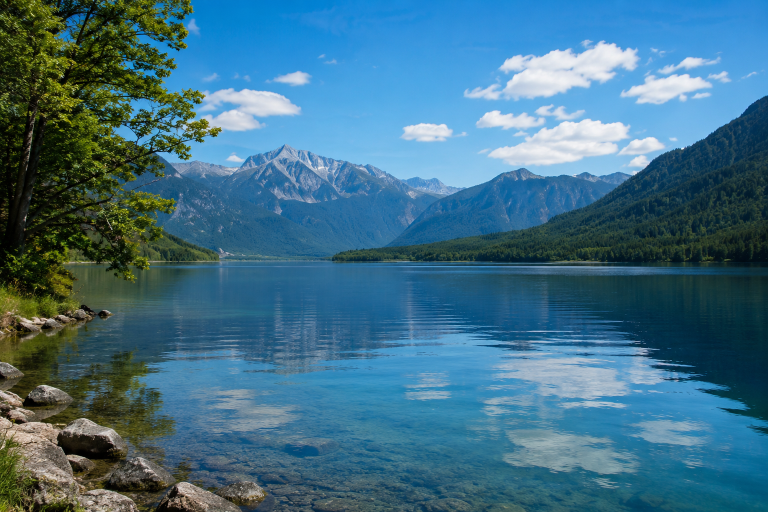

The Lure of Lakes: Understanding Earth's Vital Inland Waters
Lakes are some of the most beautiful and important parts of nature. Whether it's a huge lake like Lake Superior, which looks like a sea, or a tiny, hidden pool in the mountains, these bodies of water have a special charm for both people and animals. Even though lakes hold only a small part of the Earth's total water — most of it is in the oceans and glaciers — they contain more than 90% of the planet's fresh water that is easy to use. This makes lakes essential for life on land, for controlling the weather in local areas, and for supporting human societies.
At first glance, a lake might seem like just a nice place to swim during the summer or to fish in the afternoon. But beneath the calm, mirror-like surface is a complex, dynamic, and delicate ecosystem. Lakes are not just still pools of water; they are living things that go through changes over millions of years. They are born, grow, change, and eventually disappear. Learning about how lakes work — the way they are formed, how they behave chemically and biologically — is key to protecting these valuable sources of fresh water.
How Lakes Are Born: The Science of Formation
Lakes don't just appear suddenly; they are the result of specific and often powerful natural processes. The shape, depth, and makeup of a lake all depend on how it came to be.
Glacial Activity: The Ice Age's Impact
Most of the world's lakes, especially in the northern part of the globe, were created during the last Ice Age. Huge glaciers, sometimes many miles thick, moved like giant bulldozers across the land. As they moved forward and then melted away, they carved out deep basins in the Earth's surface. When the ice melted, water filled these basins, forming lakes. The Great Lakes of North America are a famous example of this. In mountainous areas, smaller glaciers can carve out steep, bowl-shaped holes called cirques, which then fill with water to become tarns. Also, as glaciers melt, they sometimes leave large ice blocks buried in the ground. When those blocks eventually melt, they leave behind circular depressions called kettle lakes.
Tectonic Activity: Cracks in the Earth
Some of the oldest, deepest, and most unique lakes in the world are formed by the movement of the Earth's tectonic plates. When the ground stretches and breaks, large sections can drop down, creating long, deep valleys. If these valleys fill with water, they become rift lakes. Lake Baikal in Siberia is one of the deepest and oldest freshwater lakes in the world and was created this way. Similarly, the Great Rift Valley in East Africa has a series of lakes formed by tectonic activity, including Lake Victoria, Lake Tanganyika, and Lake Malawi. These lakes are known for their rich diversity of fish species that are found nowhere else on Earth.
Volcanic Origins: Craters and Calderas
Volcanoes can create lakes in a few different ways. One of the most dramatic is the formation of a caldera. When a large volcano erupts and empties its magma chamber, the top of the volcano can collapse, creating a massive bowl-shaped crater. Over time, rain and snow fill this crater to form a lake. Crater Lake in Oregon is a well-known example of this. Another way is if a lava flow blocks a river or stream, causing water to build up behind it and form a lake.
Fluvial Processes: Rivers and Their Shapes
Rivers are always shifting their paths across flat land. When a river turns in a loop, it can create a wide bend. Over time, the river may cut a new, straight path across the narrow part of the loop, leaving behind the old bend. As the river continues to flow, the old loop fills with silt, forming a crescent-shaped lake called an oxbow lake. These lakes are usually shallow, very productive, and important for wetland habitats, but they often don't last long because sediment builds up and fills them in.
Artificial Lakes: Man-Made Water Bodies
Not all lakes are natural. For a long time, humans have built lakes by constructing dams in river valleys. These are called reservoirs and are used for various purposes like generating electricity, supplying fresh water to cities, controlling floods, and offering places for recreation. Although reservoirs are important for human needs, they change the original river ecosystem — they alter water temperatures, block fish from moving freely, and trap sediment that was once part of the natural flow.
The Anatomy of a Lake: Ecological Zonation
A lake isn't just one big body of water. Just like a forest has different parts like the canopy, the undergrowth, and the ground, a lake has different zones based on how much sunlight reaches them and what kind of life they support.
The Littoral Zone
This is the shallow part near the shore where sunlight can reach all the way to the bottom. It's the most lively part of the lake. There are plants like water lilies, cattails, and reeds that grow here. These plants give shelter to small fish, frogs, insects, and crustaceans. This area is where baby animals grow up and where a lot of food is found.
The Limnetic Zone
Moving away from the shore, we get to the open, sunny part of the lake called the limnetic zone. This area goes as deep as sunlight can reach to let plants make food through photosynthesis. The main life here is tiny. Phytoplankton, which are microscopic algae and bacteria, use the sun's energy to make oxygen and form the base of the food chain. Zooplankton, which are tiny animals, eat the phytoplankton, and then small fish eat the zooplankton.
The Profundal Zone
Below the limnetic zone is the dark, deep part of the lake called the profundal zone. Because there's not enough sunlight here, plants can't grow. The water is much colder and often has less oxygen than the top layers. The animals here survive by eating what sinks down from the sunny parts above, like dead plants, animals, and waste.
The Benthic Zone
This is the bottom part of the lake made of sand, mud, and silt. It starts near the shore and goes all the way to the deepest part. The benthic zone is where decomposers like bacteria and fungi break down the organic material that falls from above. This area also has creatures that live on the bottom, like worms, insect larvae, mollusks, and fish that eat from the bottom. The health of this zone is important because the decomposers recycle nutrients back into the water.
The Breath of a Lake: Thermal Stratification and Turnover
In temperate regions, deep lakes go through a natural process that helps keep the ecosystem healthy. Water is heaviest at about 4 degrees Celsius (39.2°F), which is why ice floats on top of water. This causes lakes to form layers during summer and winter.
During summer, the sun warms the top layer of water, making it lighter and floating above the colder, denser bottom layer. Between these two layers is a thin layer called the thermocline, where the temperature drops quickly. Because of the difference in density, the warm, oxygen-rich water and the cold, nutrient-rich water don't mix.
In the fall, as the air gets colder, the surface water cools down and becomes heavier. When it hits 4°C, it sinks, mixing with the bottom water. This mixing event is called the fall turnover. It helps bring oxygen to the deep parts of the lake and bring nutrients up to the surface. A similar turnover happens in spring when ice melts, helping prepare the ecosystem for the growing season.
The Lifespan of a Lake: Trophic States
Unlike oceans, lakes are temporary in the long run. Their life cycle is marked by how much nutrients they have, a process known as eutrophication.
- Oligotrophic Lakes: These are young lakes that are deep, cold, and have very little nutrients. Because of the lack of nutrients, there is not much algae or plant growth, resulting in clear water with plenty of oxygen. Crater Lake and Lake Tahoe are examples of oligotrophic lakes.
- Mesotrophic Lakes: As time passes, more sediment and nutrients come into the lake from the surrounding area. This makes them mesotrophic—middle-aged lakes. They have a good balance of nutrients, which supports healthy plant and algae growth, along with a wide variety of fish.
- Eutrophic Lakes: Over time, the lake becomes shallower as it fills with sediment and nutrients. This is a eutrophic lake. It has lots of plants and algae, and the water is often murky. Though productive, the large amounts of decomposing plant matter at the bottom can use up oxygen, making it hard for some fish to survive.
- A Swamp or Bog: Eventually, a shallow eutrophic lake can fill up with organic matter and sediment, turning into a wetland, a swamp, or a bog, and finally becoming solid land.
Cultural Eutrophication: Human Acceleration
While eutrophication is a natural process that takes thousands of years, human activity has sped it up, a phenomenon called cultural eutrophication. Runoff carrying synthetic fertilizers from farmland, untreated sewage, and phosphorus from detergents flows directly into lakes.
This sudden increase in nutrients acts like a boost for the lake, causing rapid, uncontrolled algal blooms. These thick green layers block sunlight from reaching underwater plants. Worse, when these blooms die and sink to the bottom, bacteria that break them down consume a lot of oxygen. This rapid oxygen loss creates "dead zones" where fish and other aquatic life can't survive.
Conclusion: Guardians of the Freshwater
Lakes are much more than just large puddles of water. They are beautiful, living parts of our continent that help control the climate, provide clean water, support complex food webs, and offer a place for people to relax and think.