
The Darkest Day: The Reality of the July 20th Protests
The Darkest Day: The Reality of the July 20th Protests
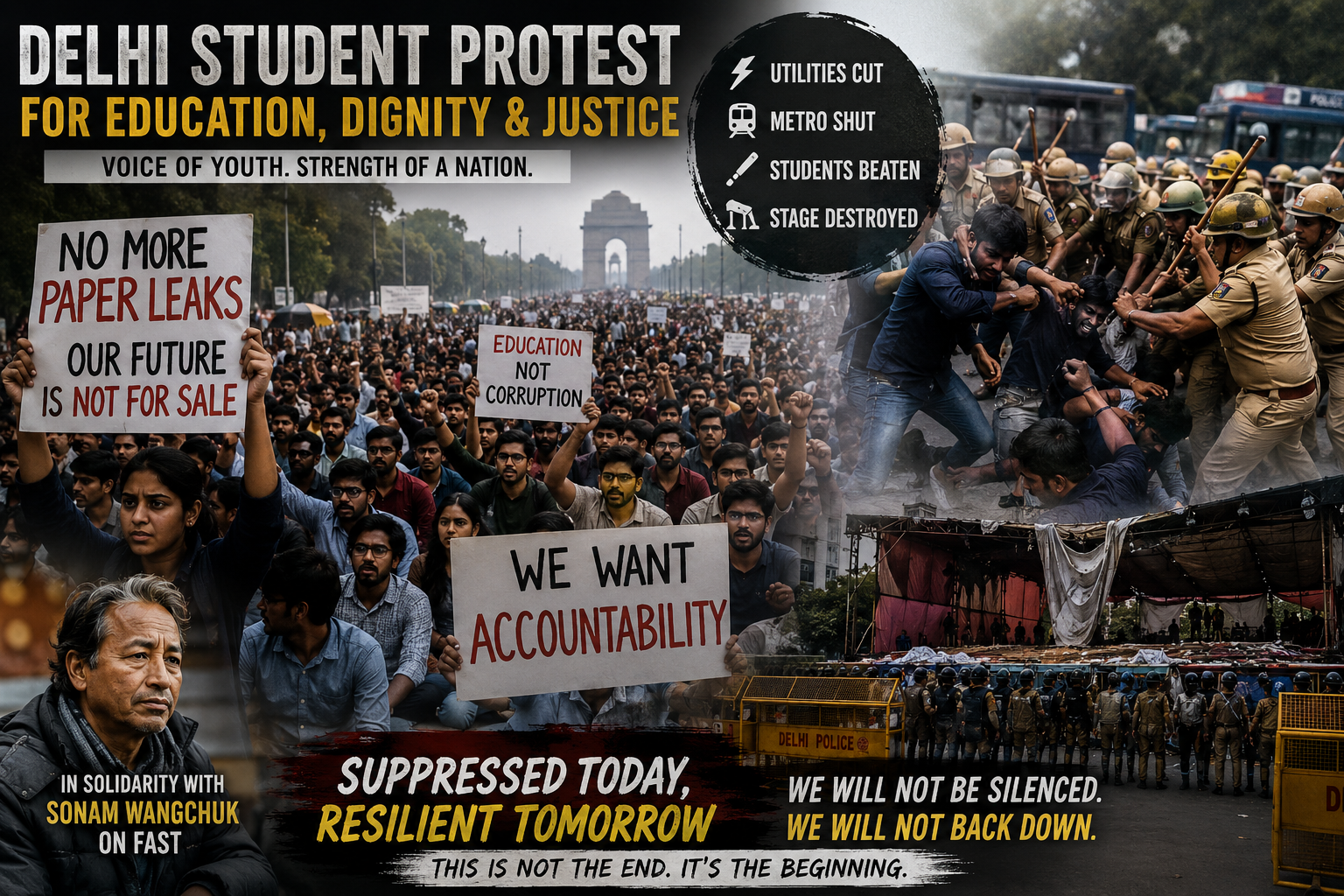
Central Delhi, July 20, 2026. If you were looking for a word to describe the scene, "chaos" wouldn't even begin to cover it. What was meant to be a peaceful march for the future of the nation’s youth quickly devolved into a scene of unimaginable grief and terror. To many who lived through the brutality of that day, it has been etched into memory as the darkest day in the history of independent India—a day when the fundamental question on the streets shifted from demanding an education minister's resignation to asking whether India is still a democracy or if it has fully slipped into a dictatorship.
The Spark That Ignited a Movement
The anger had been simmering for a long time. Following 80 paper leaks, rampant corruption, the tragic deaths of students, and a broken education system, the youth had had enough. The initial demand was straightforward: the resignation of Education Minister Dharmendra Pradhan. But the final straw that truly mobilized the masses was the sudden, forceful detention of Sonam Wangchuk, an elderly activist who had been on a peaceful hunger strike for weeks.
The outrage over his treatment brought together people from all walks of life. This was no longer just a student issue; it had struck a chord with parents, working professionals, and ordinary citizens across the nation.
A Sea of Citizens
By 9:00 AM on July 20th, Jantar Mantar and the surrounding areas of Parliament Street were unrecognizable. The sheer volume of people who showed up caught everyone off guard—the government, the media, and even the organizers (CJP). The crowds spilled miles beyond the barricades, extending far past the metro stations, which had been shut down by the authorities to restrict movement.
It was a staggering sight: 16-year-old high schoolers skipping class because they feared for their future competitive exams, middle-aged couples taking a day off from the office, and the so-called "lazy" Gen-Z proving that when they step out of their homes, they step out with unwavering solidarity and brotherhood. They weren't there as violent agitators; they were there as a family, demanding their fundamental right to a fair education and an accountable government.
The Inhumane Crackdown
The violence didn't begin with the swing of a baton; it began with the systematic stripping of basic human dignity. Thousands of people were barricaded in the sweltering July heat, packed tightly together like cattle. Water supplies were cut off, and local vendors were forced to shut down. The desperation reached such agonizing heights that parched students were forced to drink water from washrooms and kitchen pipes.
When the breaking point was reached and the claustrophobic crowds inevitably surged, the state's response was terrifyingly disproportionate. Unidentified men wielding batons—some in civilian clothes without police uniforms or name tags—unleashed a brutal lathi charge. Tear gas filled the air. They didn't see age or gender; teenagers, women, and the elderly were beaten mercilessly. Students were left bleeding, begging for their lives, while officers allegedly smirked and flashed obscene gestures at them.
A Failure of Leadership
While the citizens bled on the streets, a profound failure of leadership unfolded behind the scenes. The political opposition, meant to be the voice of the people, was safely tucked away in Parliament, entirely absent when the youth needed them most.
Furthermore, the managing organizers of the protest failed the very people who trusted them. As panic ensued and police batons came down, the CJP leadership was nowhere to be found on the ground. It was later revealed that while students were being crushed, some spokespersons were secretly meeting with politicians behind closed doors. There was no communication, no microphones, and no guidance—leaving an ocean of people entirely vulnerable.
Ideas Are Bulletproof
Despite the shattered glass, the broken heads, and the sheer trauma inflicted on July 20th, the spirit of the protest remains unbroken. What began as a student uprising against paper leaks has transformed into a massive citizens' movement against unchecked state power.
The state may have succeeded in clearing the streets through brute force, but they failed to crush the ideology behind the march. As one young protestor aptly reminded us through a simple, faceless mask: you can beat the flesh, but ideas are bulletproof. The people are realizing that they are fighting for their most basic rights, and a populace awakened to its own power cannot be silenced by a lathi.
credit & source:- Sarthak Documentaries and Sarthak Goswami