
The Architecture of Answers: Unpacking the Dimensions of Personal and Collective Responsibility
The Architecture of Answers: Unpacking the Dimensions of Personal and Collective Responsibility
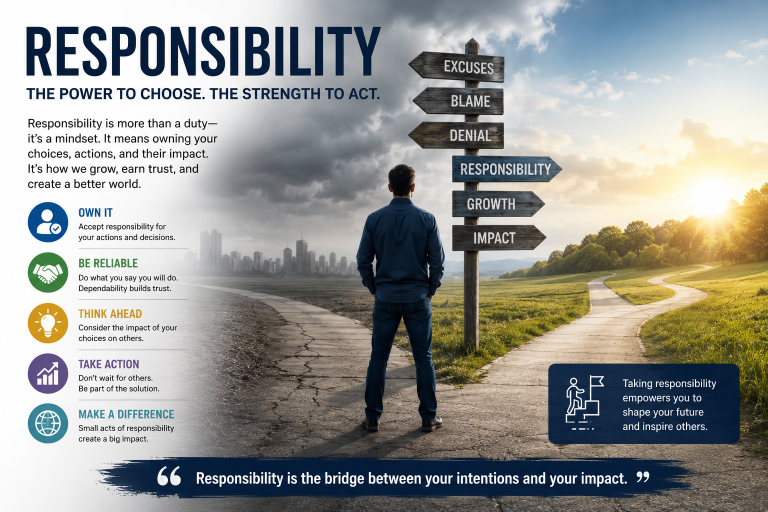
Responsibility. It's a word that can feel really heavy, like it's holding the weight of things we're supposed to do, things we need to be accountable for, and even the possibility of making mistakes. For many people, it brings up pictures of long workdays, tough choices, or the stress of having to explain things that went wrong. We often talk about "taking responsibility" or "being responsible" as if it's something unpleasant we have to endure. But what if responsibility isn't just something we have to suffer through, but actually forms the foundation of a meaningful life? What if, instead of being a chain that holds us back, a real understanding of responsibility is actually the path to freedom and deep connections?
Responsibility is the basic thread that holds together the fabric of society. It's the quiet agreement that lets us trust the bridges we cross, the food we eat, and the promises we make. Its reach is huge, from the personal part of our own lives to the big challenges we face as a world. By looking closely at the different ways we take responsibility, we can take it out of the realm of just being something we have to do and see it as a way to be more empowered.
The Blueprint of the Self: Taking Charge of Ourselves
The journey of responsibility starts not from the outside, but from inside, in the quiet spaces of our own minds. This is personal responsibility, the most important part of all other kinds. At its heart, personal responsibility is about accepting that we are the main creators of our own lives. While we can't always control the situations we're born into or the things that happen to us, we can control how we respond to them.
This is both freeing and challenging. It means avoiding the temptation to blame others for our unhappiness—like thinking our boss, partner, or past is to blame. When we take personal responsibility, we understand that our thoughts, emotions, and decisions are our own. We stop asking, "Why is this happening to me?" and start asking, "How will I choose to handle this?"
Personal ownership is built through daily effort and honesty. It's about owning up to our mistakes without blaming anyone else, following through on our promises even when it's hard, and taking care of our own well-being instead of waiting for someone else to do it. This internal structure shapes our character. It helps determine whether we're fragile and break easily or strong and able to adapt and grow.
Building Community: The Social and Ethical Aspect
As we move beyond ourselves, the concept of responsibility becomes bigger. We're not alone; we're connected parts of a larger social web. This leads to a deeper layer of social and ethical responsibility. This form of responsibility means knowing how our actions affect others and understanding our role in the well-being of our communities.
Ethical responsibility goes beyond just following the law. It's about having an inner sense that guides us toward fairness, kindness, and respect. In our jobs, it means making sure our work is honest and adds value, not just money. In our relationships, it means listening fully, helping out, and respecting each other's limits. It also includes a responsibility towards those who are less powerful—choosing to use our voice and resources to help others.
Social responsibility also means stepping up and dealing with the big issues our society faces. It means going from just talking about problems to actually taking part in solving them. This could mean volunteering, getting involved in community matters, or just being careful with what we buy and how we live. A strong community needs people who see taking care of it as something everyone shares, not just something others do for us. This shared sense of responsibility is what builds trust, and trust is the essential thing that keeps any society working.

Guardians of the Green: Environmental Stewardship
Perhaps the most important and challenging part of our responsibility in the 21st century is how we relate to the natural world. Environmental responsibility, or stewardship, means we need to change the way we see ourselves—from being in control of the Earth to being its caretakers. It means we have to accept that our civilization is part of a fragile Earth system and that we have the power to ruin it.
For too long, the cost of our progress on the environment has been ignored or passed on to future generations. Environmental responsibility says we need to face these costs head-on. It’s about making choices that are sustainable, from the energy we use to the things we buy and the waste we produce. It means creating solutions that work with nature, not against it.
As shown in the picture that goes with this, environmental stewardship is often best shown through real, local actions that have a big impact. A person planting a tree in a modern, sustainable city is a perfect example of this. It’s a small but meaningful act of belief in the future, showing that today’s careful efforts can provide shade and clean air for many years to come. This is what responsibility as stewardship looks like—quiet, focused work that helps keep the foundation of life strong.
Designing Tomorrow: The Intergenerational Contract
Planting a tree leads us to the next big idea: intergenerational responsibility. This is the idea that we are only temporary caretakers of the world and have a deep duty to those who will come after us. We are part of a long line of caretakers, receiving a legacy from our ancestors and creating the legacy we pass on to others.
This way of thinking changes the way we see many of today’s issues. It’s not just about making the economy grow in the next few months; it’s about the kind of world we are leaving behind in fifty or a hundred years. Intergenerational responsibility means we have to think in terms of centuries, not just short-term politics. It asks: are we solving problems or just putting them off? Are we creating strong systems or just focusing on what’s easiest right now?
Looking at things with this long-term view gives our actions a new sense of importance and meaning. It connects our everyday choices to a larger, ongoing story. When we approach our work, our consumption, and our relationships with the future in mind, we’re not just going through the motions—we’re making real contributions. We become people who future generations will look up to.
Conclusion: Responsibility as Empowerment
Responsibility isn’t just one thing—it’s a whole structure made up of ownership, connection, stewardship, and legacy. It takes courage to embrace, because it forces us to face our limits and answer for our choices. But within this structure, there is true power.
By taking personal responsibility, we take ownership of our potential. By being socially responsible, we build trust and connections. Through environmental stewardship, we live in harmony with the Earth. And by honoring the agreement we have with future generations, we make sure our lives have a lasting impact.
Choosing to be responsible is the choice to live fully, to step into the role of an active change-maker instead of someone just watching from the side. It’s the choice of an architect—not just someone who lives in a space, but someone who designs a life and a world that are strong, fair, and able to last. Far from being a heavy burden, responsibility is the true foundation of our freedom.